On carpet the choir gets a bit muffled, though the back rows hear the sermon better. There’s no one-size-fits-all answer here. But it makes sense to talk to your choir director before you sign the estimate.
Don’t forget about looks. The floor is one of the largest surfaces in the sanctuary, and people see it every time they bow their heads in prayer. Cold gray tile next to a warm wooden altar catches the eye even of someone who has never cared about design.
And safety. Older people, parents with strollers and kids all come to services. Wet shoes during monsoon season make a glossy floor by the entrance dangerous. So church floor design always has to balance beauty, sound and making sure nobody slips.
What We Put on Church Floors and Why
In old European cathedrals, marble and mosaic church floors were laid by hand, stone by stone. Few can afford that kind of work today, and not everyone needs it. You can get a similar look with concrete and epoxy. That’s what we work with.
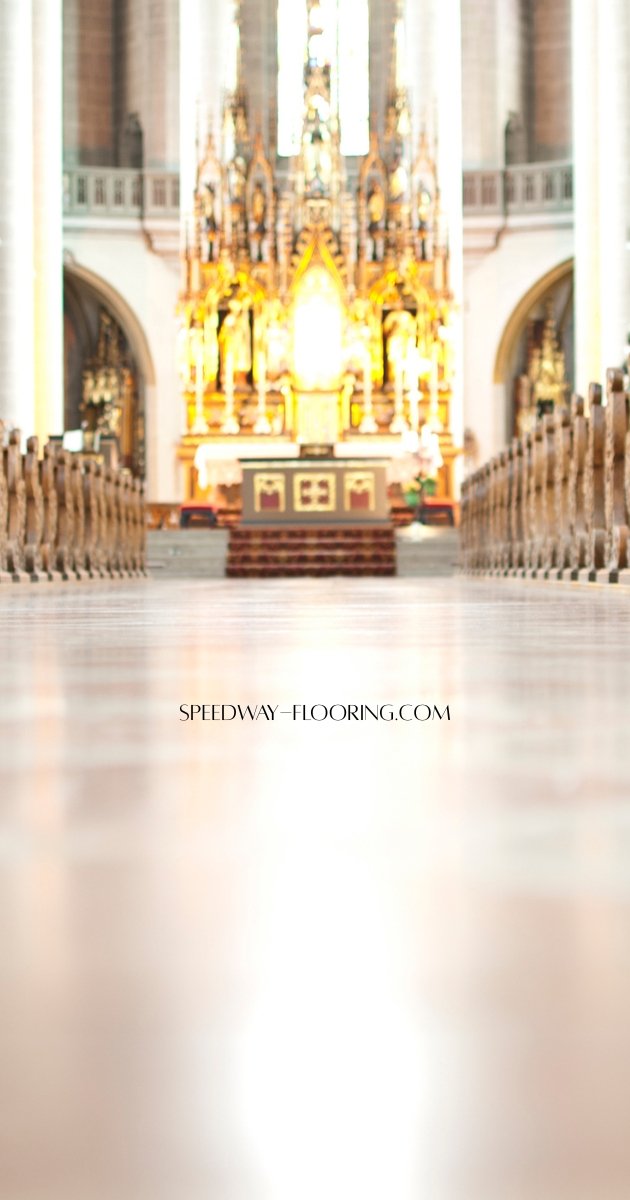
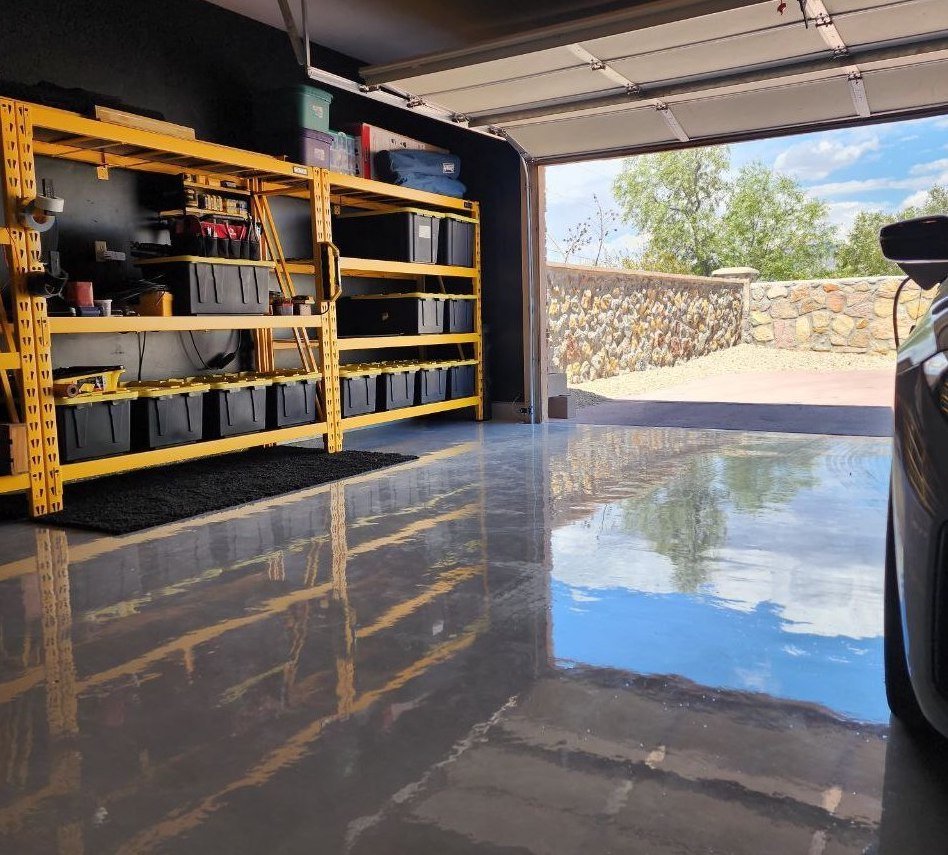
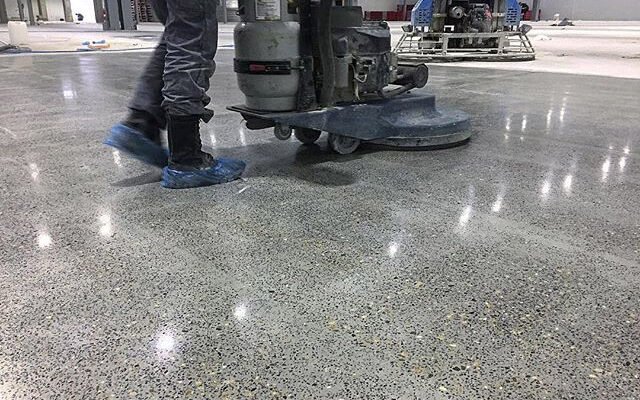
We recommend polished concrete for large sanctuaries that see a lot of people every Sunday. The concrete is ground until it starts to shine. There’s no paint and no film on top, so nothing can peel. A drop of wax comes off this floor with a plastic scraper in a few seconds, without a trace. On a sunny day, colored light from the stained glass falls right onto the floor, and the room feels brighter. You clean it with a regular damp mop.
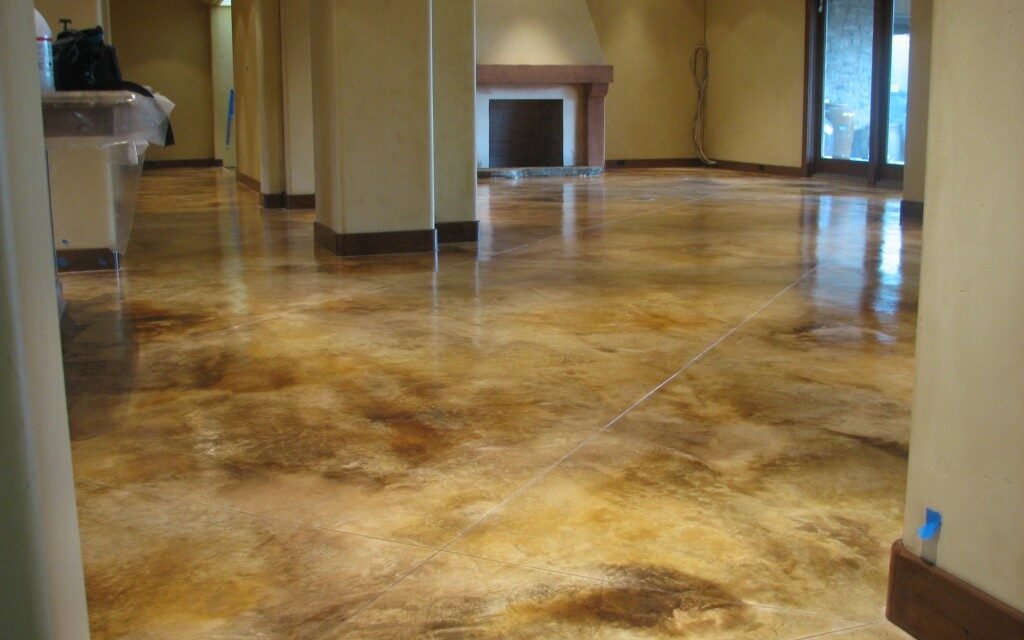
Stained concrete is what people pick when gray feels too cold. The shades run terracotta, sand, strong coffee. The stain soaks into the concrete surface itself instead of sitting on top, so it doesn’t wear off underfoot, it just fades a little over the years. Swirls and color shifts happen on their own, and no two floors ever come out the same. In mission-style churches, and there are plenty of them in the Southwest, this kind of floor looks like it’s been there from day one.
Terrazzo is for those who want to see a picture in the floor. You can set a cross, a circle, your parish symbol or an ornament along the aisle right into epoxy terrazzo. The color, the size of the chips (marble or glass) and the shape of the metal strips between colors are chosen separately for every project. So there are exactly as many church floor designs as your imagination allows. After grinding, the surface becomes dense and doesn’t absorb stains.
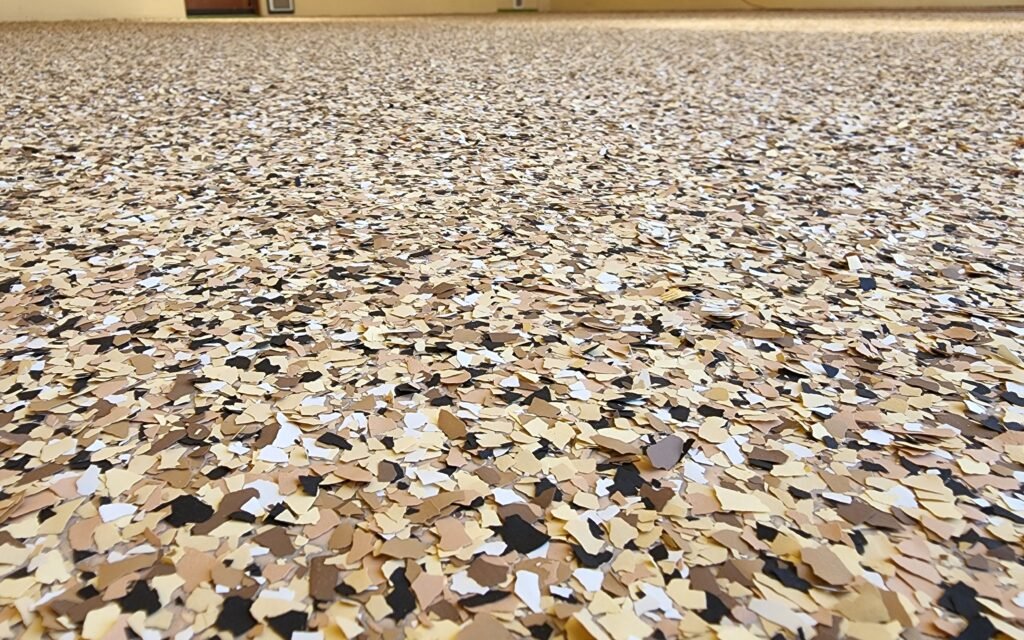
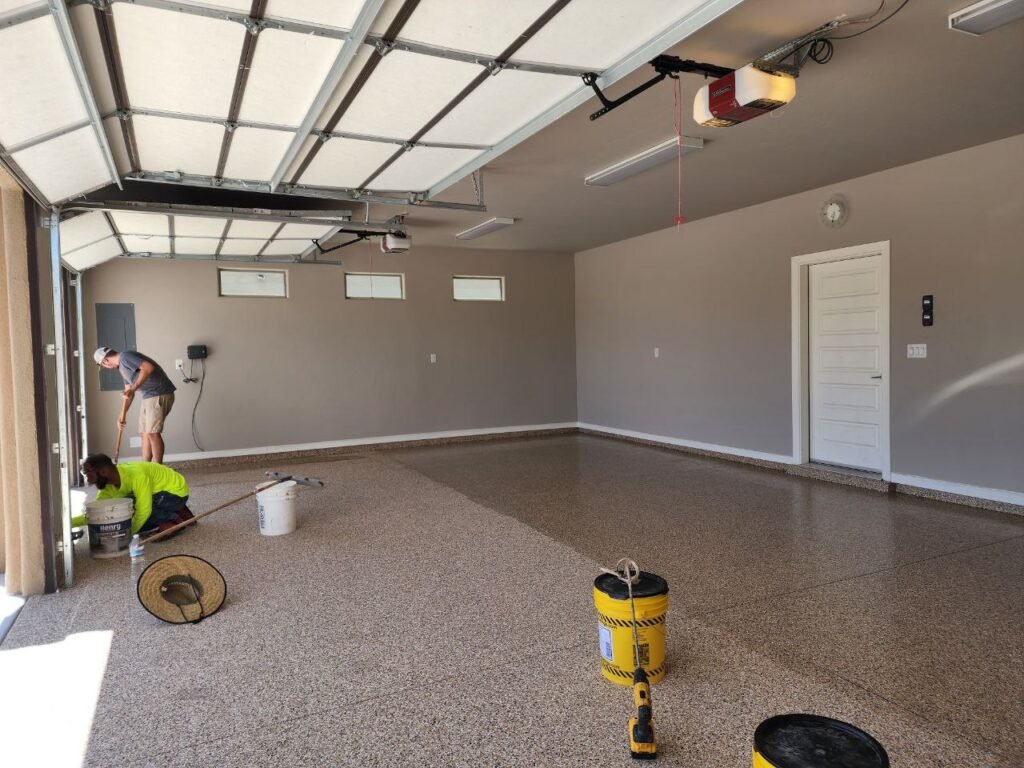
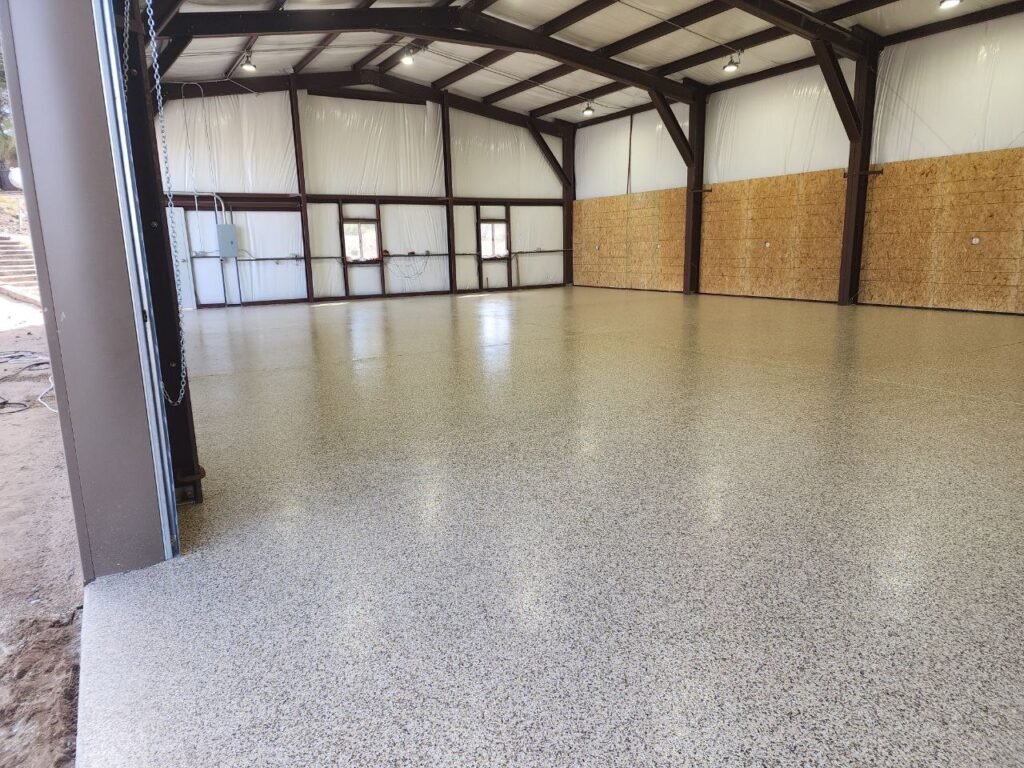
For support spaces (the fellowship hall, kitchen, nursery, basement), flake epoxy is a great fit. It isn’t afraid of spilled tea, Sunday school paint, or tables being dragged around.
That’s exactly why choosing the right church floor matters. Figuring it out on your own can be really hard. But you don’t have to, because Speedway Flooring is here. We’ll give you a free consultation, and our specialist will look at your project, estimate the cost and timeline, and help you pick the right floor.
How to Choose the Right Church Flooring
The most common mistake happens when a congregation picks a material from photos online and then finds out it doesn’t suit their building. It’s much more reliable to start with the church itself. Here’s the order we recommend.
- Spread your church floor plan out on a table and divide it into zones with a pencil: entrance, center aisle, the space under the pews, altar, and back rooms. The entrance and the aisle work a lot harder than the space under the pews, so they can get different materials.
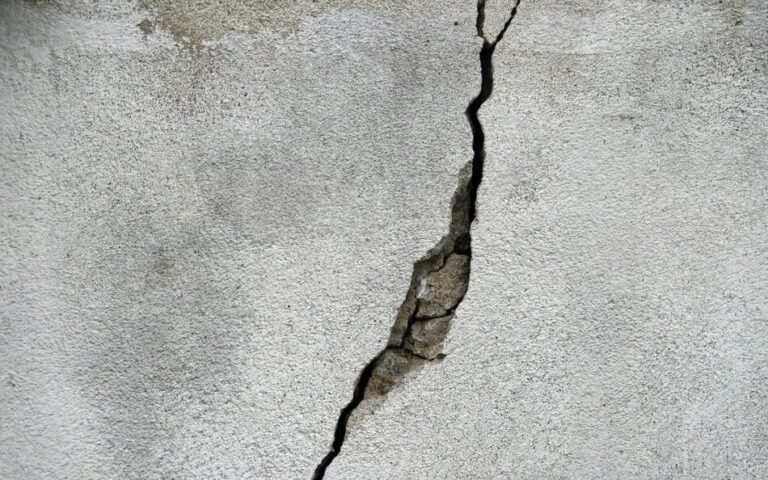
- Check the condition of the concrete. Older buildings often have cracks and high moisture in the slab. If you don’t fix them first, no coating will last long.
- Sit down with your pastor and your choir director or organist. One of them wants the organ to sound at full power; another wants older folks in the last row to catch every word. Sometimes the best answer is a mix, with a hard floor in the aisle and carpet under the pews.
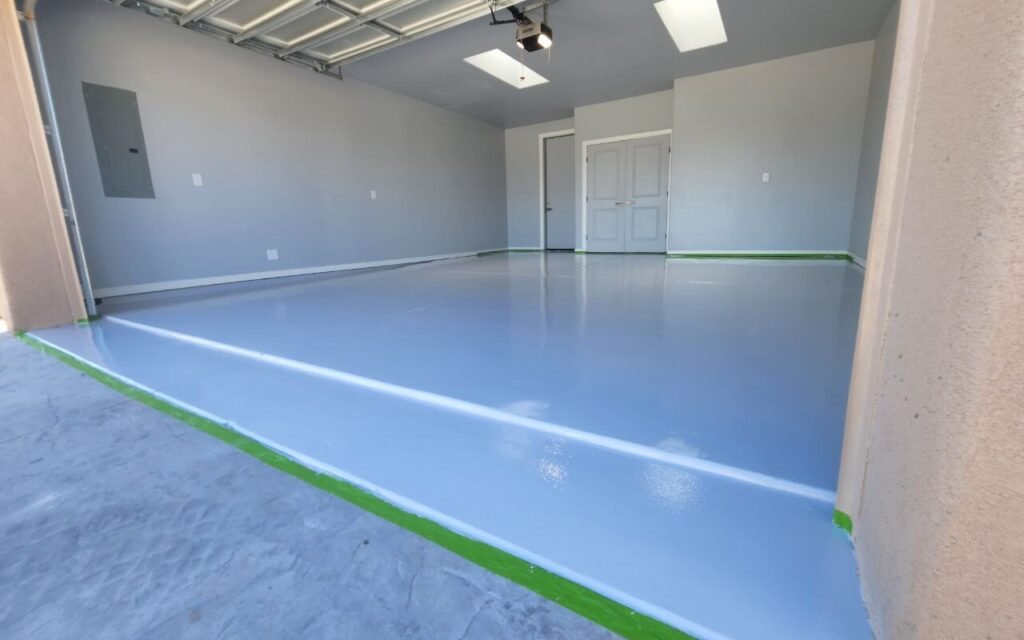
- Think about anti-slip additives by the entrance and on the steps. That’s where they’re needed more than anywhere else.
- Mark where candle stands and heavy items sit. Under a floor candelabra, it’s worth adding a protective layer that resists wax and scratches.
- Match the work schedule to your calendar of services so you don’t disrupt important holidays.
Once you’ve written all this down, you’ll see that out of a dozen materials, only two or three really fit. From there, taste and budget decide. We often suggest a combination. Polished concrete in the aisles, stained concrete under the pews, and terrazzo only in front of the altar, where everyone looks. That way the money goes where people will see it and where the floor works hardest.
A separate word about traditional churches. A Catholic church floor plan is usually cross-shaped. First the narthex, then a long nave, the transept crossing it, and the altar area at the end. That said, Catholic church floor plans in the old missions of the Southwest are often simpler, just one long nave. A Roman Catholic church floor plan, cross-shaped or simple, also hints at the floor design. You can highlight the aisle along the nave with color or a strip of terrazzo, and put a central pattern in front of the altar. Church floor plans of other denominations are simpler, often just a rectangular hall. Anyone who walks into a church looks down without thinking, and the floor pattern guides their eyes. Let it guide them forward, toward the altar. A busy pattern under the pews looks impressive in a rendering, but in a room full of people it makes your eyes swim.
Show Us Your Church, and We’ll Tell You Where to Start
A good church floor is almost invisible. Nobody complains about it, nobody repairs it every year, and on holidays it looks just as neat as on an ordinary Sunday. To get there, the flooring is chosen for the building’s layout, its sound, and the real load, not for a trendy picture.
We’re certified epoxy floor coating installers, and we work with dust-free equipment. Grinding concrete usually creates fine dust that settles on everything. Our grinders with vacuum systems collect it right away, so your icons, organs, and pews are safe. We inspect the slab, offer several pricing options, and guarantee our workmanship. We serve Las Cruces, El Paso, and surrounding cities.
Call (575) 993-3535 or request a free estimate. We’ll come out, take a look at your church, and suggest a floor that will serve more than one generation of parishioners.